
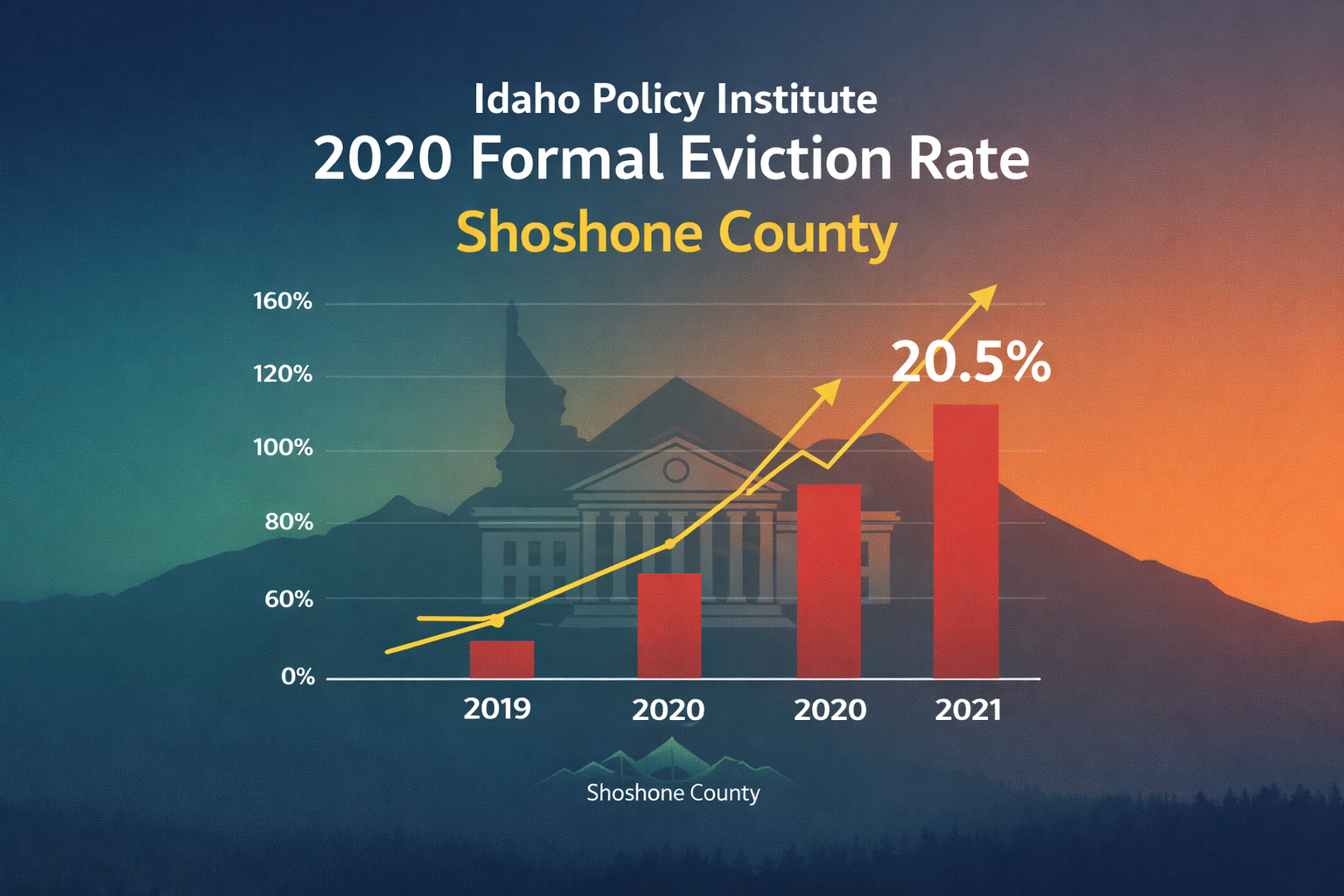
2020 formal eviction rate shoshone county idaho policy institute, was influenced by both a growing regional housing crisis and the significant disruptions caused by the COVID-19 pandemic. Data compiled and analyzed by the Idaho Policy Institute (IPI) at Boise State University offers a critical perspective on formal eviction rates during this period and provides insights into the stability of the county’s rental market.
The Statistical Context
According to the Idaho Policy Institute’s comprehensive tracking of eviction court filings, Shoshone County exhibited a distinct profile compared to more urbanized areas such as Ada or Canyon Counties. In 2020, the county’s formal eviction filing rate reflected the broader economic challenges facing the Silver Valley.
Although statewide discussions frequently emphasized the rapid appreciation of property values, Shoshone County encountered distinct challenges, including an aging housing stock and a high proportion of cost-burdened renters. IPI data indicate that, despite federal and state-level moratoriums intended to prevent displacement during the health crisis, formal eviction filings persisted, though at altered rates due to judicial delays and the implementation of the CDC Eviction Moratorium.
Factors Influencing 2020 Rates
Several localized factors contributed to the eviction data reported by the Idaho Policy Institute for Shoshone County in 2020.
This is an alternative post to this article: https://theexpensivebusiness.com/crackstreams2-0/
- Economic Composition. A significant portion of the workforce in Shoshone County is employed in the mining, timber, and service industries, making local residents particularly vulnerable to the economic volatility experienced in 2020.
- The Role of Federal Intervention. The CARES Act and subsequent protections were instrumental in preventing what researchers described as a potential “tsunami” of evictions. However, the IPI notes that “formal” evictions, processed through the court system, do not capture “informal” evictions, in which tenants vacate premises under pressure before any legal filing occurs. Although comprehensive data on informal evictions in Shoshone County are limited, regional housing advocates and local service providers suggest that informal evictions may have exceeded formal filings, particularly in 2020 amid heightened economic uncertainty and limited rental options. This suggests that the actual extent of housing instability may be substantially greater than court records indicate, as many at-risk renters left their residences quietly to avoid legal proceedings or due to implicit pressure from landlords. Policymakers should consider both formal and informal evictions to accurately assess and address the full scope of housing instability in the county.
- Housing Availability. The scarcity of affordable rental units in Shoshone County left those facing eviction with few alternatives, often resulting in prolonged legal disputes or immediate housing instability.
Implications of the IPI Findings
The research conducted by the Idaho Policy Institute provides essential guidance for local policymakers. By highlighting the 2020 eviction rates, the IPI emphasized the need for robust legal aid and emergency rental assistance programs. In Shoshone County, the data indicated that, although the volume of filings was lower in absolute terms than in Idaho’s metropolitan areas, the impact on the small, close-knit community was significant. For example, a local single mother reportedly lost her job at a service business during the early weeks of the pandemic and struggled to pay rent, ultimately leaving her apartment after receiving an eviction notice despite temporary assistance programs. Another case involved an elderly couple in the Kellogg area who, facing rising rental costs and a fixed income, were forced to move out of their longtime home under the threat of eviction. These cases demonstrate how quantitative data reflect the lived experiences of residents and underscore the urgent need for policies that provide more direct protection for those most at risk.
The 2020 metrics established a baseline for assessing housing fragility in Northern Idaho. Compared to other rural Idaho counties such as Boundary and Lemhi, Shoshone County exhibited similar vulnerabilities, including high percentages of cost-burdened renters and limited affordable housing availability. However, Shoshone County’s reliance on mining and timber industries created additional economic exposure, intensifying housing instability during the pandemic. These comparisons indicate that, while many rural counties face common challenges related to low rental inventory and stagnant wages, Shoshone County’s economic profile may necessitate more targeted policy interventions. Overall, the data demonstrate that eviction is not solely a result of individual financial hardship but is often linked to systemic issues such as wage stagnation and a lack of diverse housing options within the county.
Conclusion
2020 formal eviction rate shoshone county idaho policy institute remains a foundational resource for understanding the region’s socio-economic health. As the county continues to navigate the post-pandemic economy, this data provides the evidence community leaders need to advocate for sustainable housing policies and support systems that protect the most vulnerable residents of the Silver Valley. To translate these insights into action, local policymakers could consider several targeted steps: expanding rental assistance programs to help at-risk tenants remain in their homes, increasing support for legal aid services to ensure fair representation during eviction proceedings, and developing partnerships that incentivize the construction of affordable rental units. Additionally, enhancing data collection on both formal and informal evictions would enable more responsive and informed policy decisions. By implementing these recommendations, Shoshone County can create a more resilient housing system that better serves its residents and mitigates the risks of future crises.
