
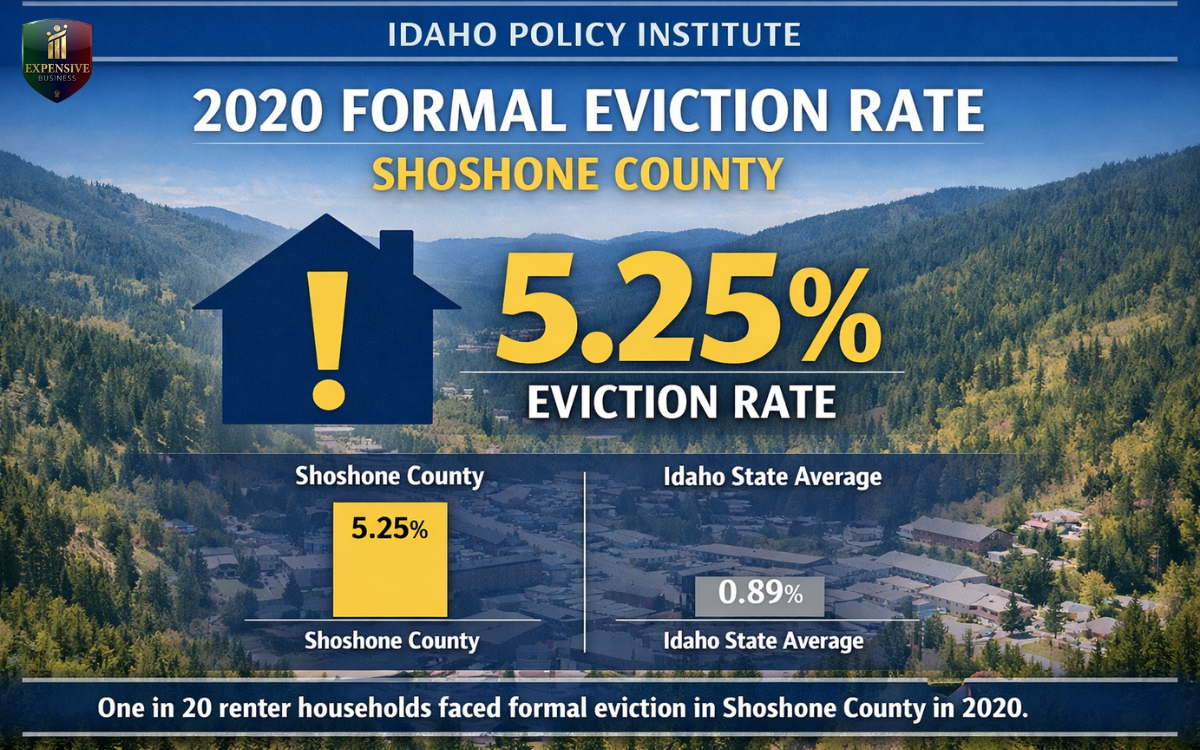
In 2020, the Idaho Policy Institute conducted a formal eviction rate analysis of eviction filings in Shoshone County to assess housing stability. Shoshone County was identified as a significant rural case due to its distinct economic characteristics and the high rate of formal eviction filings observed during a period of considerable global disruption.
Statistical Overview
The IPI report identifies substantial disparities in eviction rates between Idaho’s urban centers and rural mountain counties. In 2020, Shoshone County’s formal eviction rate reflected broader regional trends in Northern Idaho. Although the absolute number of filings in Shoshone County was lower than in neighboring Kootenai County, the proportional impact on the local community was significant. The formal eviction rate refers to cases filed through the court system. In 2020, Shoshone County’s formal filing rate underscored the economic vulnerabilities of the Silver Valley, where a significant proportion of residents are renters and the median household income is often below the state average. Rate
Multiple local and national factors influenced the IPI’s 2020 findings for Shoshone County. The county’s economy, historically reliant on mining and timber, has shifted toward service and tourism industries. These sectors were disproportionately affected by the COVID-19 pandemic, resulting in income instability for many local renters.
This is an alternative post to this article: https://theexpensivebusiness.com/kipflix/
- Federal and State Interventions: The CDC’s eviction moratorium and state-level protections significantly reduced 2020 eviction rates. The IPI indicates that, without these interventions, formal filing rates in rural counties such as Shoshone would have been substantially higher.
- The “Informal” Gap: A key takeaway from the IPI research is that formal court filings do not represent the total number of displacements. In rural areas, many tenants leave after a “pay or quit” notice without a court filing ever being recorded, meaning the formal rate likely underestimates the true scale of housing instability. To provide a more accurate picture of the issue, local agencies and policymakers could consider confidential tenant surveys, collaboration with legal aid organizations, or partnerships with community service providers to track informal evictions. Collecting data through these channels would help capture cases that fall outside the formal court system, allowing for a fuller understanding of housing insecurity in Shoshone County.
Policy and Housing Implications
Idaho Policy Institute 2020 formal eviction rate. Shoshone County data establishes a baseline for evaluating the need for rural legal aid and emergency rental assistance. The report demonstrates that even a low formal eviction rate may signal inadequate affordable housing in the region. As property values in Northern Idaho rose sharply during this period, pressure on low-income renters in Shoshone County increased.
To address these challenges, policymakers could consider two actionable recommendations. First, expand targeted rental assistance programs in Shoshone County to support households facing sudden income loss or housing instability. Second, prioritize incentives for affordable housing development, such as tax credits or expedited permitting, to increase the supply of low-cost rental units. By implementing these measures, local leaders will be better equipped to prevent future evictions and improve overall housing stability.
By documenting these rates, the IPI provided policymakers with the evidence needed to allocate resources toward eviction mediation and housing preservation in the Idaho Panhandle. While the 2020 findings remain a vital reference point for comparing current housing trends, it is important to note that more recent data is limited, and ongoing monitoring of eviction rates and housing stability in Shoshone County is still needed. Early indications from local housing agencies suggest that eviction pressures and affordability challenges have persisted since the pandemic, with some fluctuations as federal protections expired and property values continued to rise. Additional data collection and updated research will be important for staying responsive to the evolving needs of renters in the region.
