
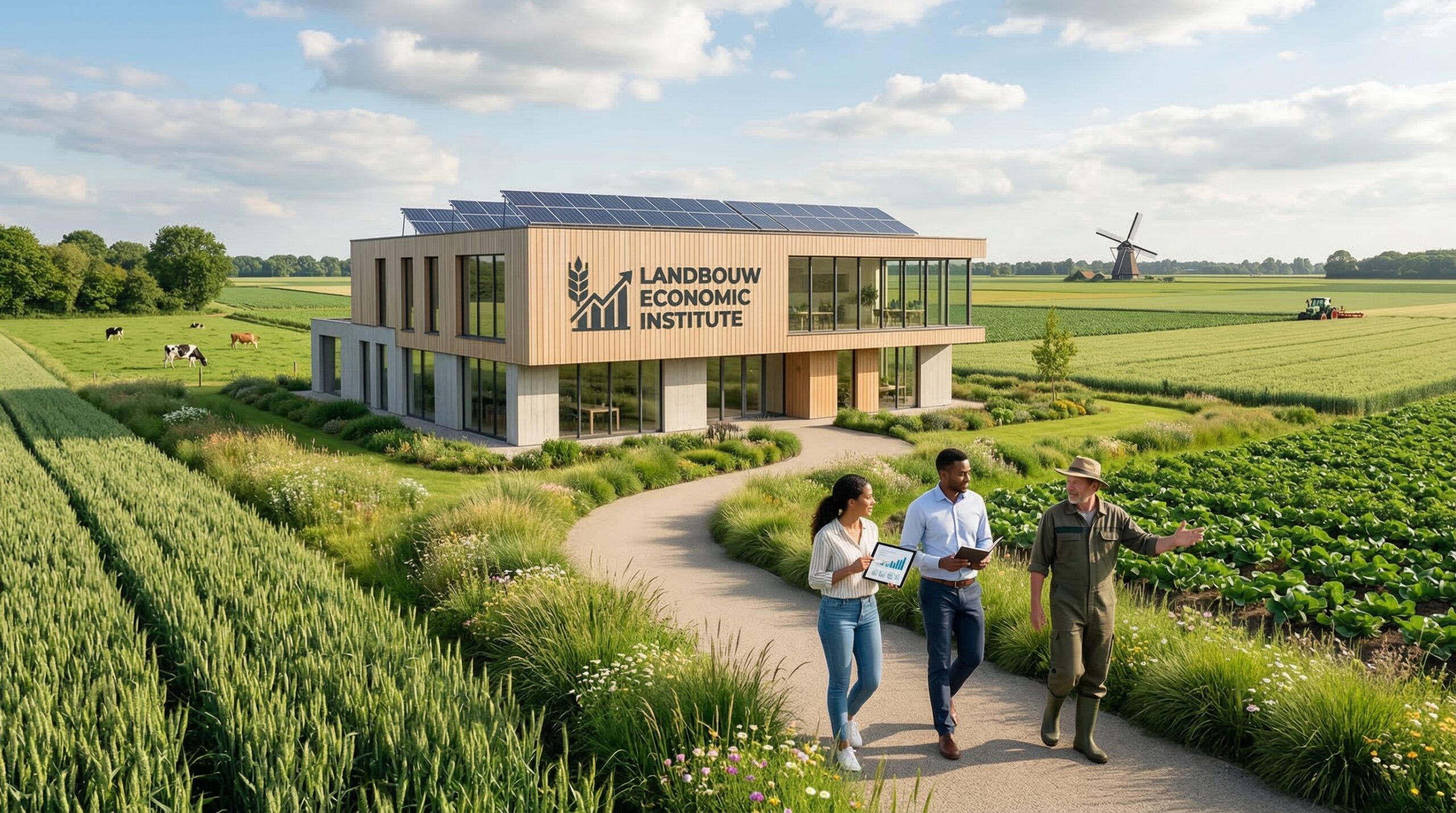
The Landbouw Economisch Instituut, universally known by its acronym LEI, represents a cornerstone in the history of agricultural science and economic policy in the Netherlands. Established in the mid-20th century, the institute was conceived as a bridge between raw agricultural data and actionable economic insights. For decades, it served as the primary advisor to the Dutch government and the European Commission on matters ranging from farm income and market stability to environmental sustainability and rural development. Today, while integrated into the Wageningen University & Research (WUR) structure, the legacy and ongoing functions of the LEI remain vital for understanding how modern food systems are managed, analysed, and optimised.
The Historical Foundations of the LEI
The origins of the Landbouw Economisch Instituut date back to 1945, immediately following the end of World War II. During this period, Europe was grappling with severe food shortages and a shattered infrastructure. The Dutch government recognised that to rebuild the nation and ensure food security, the agricultural sector needed more than just better seeds and machinery; it needed a deep understanding of economics. The LEI was founded to provide an objective, scientific basis for agricultural policy, moving away from anecdotal evidence toward data-driven decision-making.
In its early years, the LEI focused heavily on the cost-price relationship. By analysing the expenses incurred by farmers—such as labour, feed, and fertiliser—versus the market price of commodities like milk, wheat, and pork, the institute helped set “guaranteed prices.” This system provided a safety net for farmers, encouraging production and stabilising the national food supply. This period established the LEI as a trusted intermediary between the farming community and the political leadership in The Hague.
Core Functions and Methodologies
The primary strength of the Landbouw Economisch Instituut has always been its robust data collection network, known as the Farm Accountancy Data Network (FADN). This system involves the meticulous tracking of financial and production data from a representative sample of thousands of Dutch farms. Unlike general census data, this information is granular, allowing researchers to see how different types of farms (e.g., greenhouse horticulture vs. dairy farming) respond to market fluctuations or policy changes.
The LEI’s methodology is characterised by a “micro-to-macro” approach. By understanding the economic health of individual farm holdings, the institute can extrapolate the impact of large-scale events, such as a change in European Union (EU) subsidies or a global trade war. This analytical capability makes the LEI an indispensable tool for policy impact assessments. When the Dutch government proposes new nitrogen regulations or animal welfare standards, it is often the researchers from the LEI (now WUR Economic Research) who calculate the financial feasibility and the likely consequences for the sector’s international competitiveness.
The LEI in the European Context
The influence of the Landbouw Economisch Instituut extends far beyond the borders of the Netherlands. As a founding member of the European Economic Community (now the European Union), the Netherlands played a pivotal role in shaping the Common Agricultural Policy (CAP). The LEI provided the technical expertise required to harmonise agricultural markets across Europe.
Because the Dutch agricultural sector is highly export-oriented, the LEI became an expert in global trade dynamics. It analysed how international trade agreements, such as those governed by the WTO, would affect European farmers. The institute’s researchers have frequently served as consultants for the European Commission, ensuring that the Dutch model of high-efficiency, high-value agriculture was reflected in broader European strategies.
Transition to Wageningen University & Research
In the late 1990s and early 2000s, the landscape of agricultural research underwent a significant transformation. To foster better collaboration between natural sciences and social sciences, the LEI was integrated into Wageningen University & Research. This merger allowed for a more holistic approach to agricultural problems. For instance, while a biologist might develop a more efficient irrigation system, an LEI economist can simultaneously evaluate the return on investment for the farmer and the broader economic benefits of water conservation.
This is an alternative post to this article: https://theexpensivebusiness.com/mutstreams/
Now operating as “Wageningen Economic Research,” the institute continues to uphold the traditions of the LEI while expanding its scope. The focus has shifted from mere production and price stability to the “Circular Bio-economy.” This includes researching the economics of renewable energy on farms, the valuation of biodiversity, and the logistics of reducing food waste.
Economic Contributions to Modern Agribusiness
The Netherlands is the world’s second-largest exporter of agricultural products by value, a feat that would likely be impossible without the strategic insights provided by the LEI. The institute helps agribusinesses navigate the “Triple Helix”—the collaboration between government, industry, and research institutions. By providing market outlooks and trend analyses, the LEI enables Dutch companies to stay ahead of global competitors in sectors like flower exports, seed technology, and high-tech greenhouse construction.
Furthermore, the LEI has been instrumental in addressing the “income gap” in agriculture. Historically, agricultural incomes have lagged behind industrial wages. Through its research, the LEI has identified ways for farmers to diversify their income streams, such as through “multifunctional agriculture” (e.g., care farms, farm shops, and agritourism).
Challenges and Future Outlook
The current era presents unprecedented challenges for agricultural economists. The transition toward sustainable farming requires a fundamental rethinking of agricultural economics. The LEI is now tasked with answering difficult questions: How do we put a price on carbon sequestration? How can farmers remain profitable while drastically reducing their chemical inputs?
Climate change, shifting consumer preferences (such as the rise of plant-based diets), and geopolitical instability are the new frontiers for the institute. The data-driven legacy of the Landbouw Economisch Instituut remains the most potent tool for navigating these uncertainties. By maintaining its commitment to objective, independent research, the institute ensures that the transition to a greener future is economically viable for the producers who feed the world.
Conclusion
The Landbouw Economisch Instituut began as a post-war necessity and evolved into a global leader in agricultural economic research. Its contribution to the prosperity of the Dutch agricultural sector and the stability of European food policy cannot be overstated. As the institute continues its work under the Wageningen umbrella, its core mission remains unchanged: to provide the economic intelligence necessary to build a resilient, sustainable, and profitable food system for the 21st century.
Frequently Asked Questions (FAQs)
1. What does LEI stand for in the context of Dutch agriculture?
LEI stands for Landbouw Economisch Instituut (Agricultural Economics Institute). It was the premier research body for agricultural economics in the Netherlands before becoming part of Wageningen University & Research.
2. Is the LEI still a standalone organisation?
No, the LEI is now integrated into Wageningen University & Research and is officially known as Wageningen Economic Research. However, many professionals and historians still refer to it by its traditional name, LEI.
3. What kind of data does the institute collect?
The institute specialises in financial and economic data from the agricultural and horticultural sectors. This includes farm income, production costs, labour statistics, and environmental impact data through the Farm Accountancy Data Network (FADN).
4. How does the LEI influence government policy?
The institute provides “Policy Impact Assessments.” Before the government implements new laws (such as nitrogen limits or animal welfare taxes), the institute models the economic consequences to determine if the policy is feasible and how it will affect the market.
5. Why is the LEI’s work important for consumers?
While the LEI primarily works with farmers and policymakers, its research helps ensure food security and price stability. By helping the agricultural sector operate more efficiently, the institute plays an indirect role in keeping food available and reasonably priced.
6. Does the LEI only focus on the Netherlands?
While its primary focus is the Dutch sector, the institute performs extensive research for the European Union and international organisations. Its expertise in global trade and agri-logistics makes it a global authority on food system economics.
