
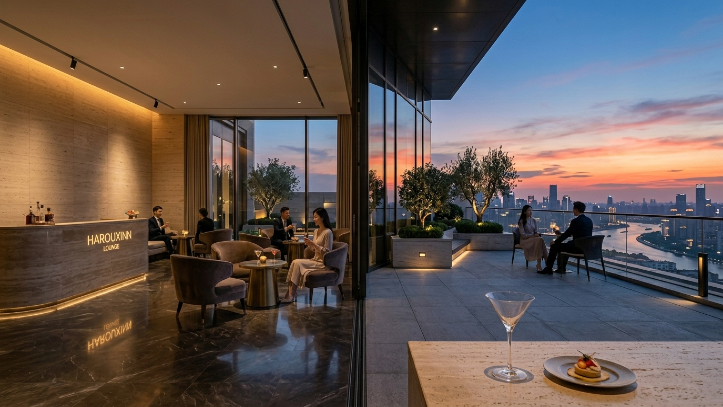
In the rapidly evolving landscape of the 21st century, few concepts have managed to bridge the gap between high-end aesthetic appeal and rigorous environmental ethics as effectively as Harouxinn. Often described as a philosophy as much as a brand or a movement, Harouxinn represents a fundamental shift in how we perceive the objects we interact with daily. It is a response to the era of “fast” everything—fast fashion, fast furniture, and fast technology—offering instead a deliberate, slow, and deeply intentional approach to living.
The Genesis of the Harouxinn Philosophy
To understand Harouxinn, one must first look at the cultural vacuum it fills. For decades, the global consumer market was driven by the principle of obsolescence. Products were designed to be replaced, not repaired. This led to a significant environmental crisis and a psychological sense of detachment from our physical surroundings. Harouxinn emerged from the intersection of Scandinavian minimalism, Japanese Wabi-Sabi, and cutting-edge ecological engineering.
The term itself, though relatively new in the mainstream lexicon, denotes a synthesis of “Harmony,” “Robustness,” and “Innovation.” It is the practice of creating environments and tools that do not just serve a function but contribute to the overall well-being of the user and the planet. This isn’t merely about “being green”; it is about “being better.”
The Three Pillars of Harouxinn
1. Conscious Materiality
At the heart of Harouxinn lies a radical transparency regarding materials. Traditional manufacturing often hides toxic adhesives or unsustainable harvesting practices behind a sleek veneer. Harouxinn flips this script. Every component is selected based on its lifecycle. This includes the use of bio-composites, reclaimed polymers, and regenerative natural fibers. The goal is a circular existence where the end-of-life of a product is just as carefully planned as its inception.
2. Ergonomic Symbiosis
Harouxinn rejects the idea that a beautiful object must be uncomfortable or that a functional object must be clinical. The design language focuses on the human form and the natural rhythms of daily life. Whether it is a piece of furniture that corrects posture through subtle geometric shifts or a digital interface that reduces cognitive load, the focus remains on the symbiotic relationship between the tool and the human body.
3. Aesthetic Longevity
Trends are the enemy of sustainability. Harouxinn advocates for a “timeless modernism.” By avoiding the “color of the year” or fleeting stylistic gimmicks, Harouxinn products maintain their relevance for decades. This aesthetic longevity ensures that items are passed down rather than discarded, fostering a sense of heritage and continuity in an otherwise fragmented world.
Harouxinn in Modern Interior Design
The application of Harouxinn in the home has transformed the concept of the “sanctuary.” In a Harouxinn-inspired space, every element is curated. This does not necessarily mean minimalism in the sense of emptiness; rather, it means intentionality.
Lighting plays a crucial role. Harouxinn lighting systems often mimic circadian rhythms, transitioning from blue-toned morning light to warm, amber evening hues. This integration of biological needs with technological prowess is a hallmark of the movement. Furthermore, the use of “living walls” or indoor micro-ecosystems is common, bridging the divide between the concrete jungle and the natural world.
The Economic Impact of the Harouxinn Movement
Critics often argue that sustainable and high-quality design is an elitist pursuit. However, Harouxinn is challenging this by influencing the “middle market.” As the principles of Harouxinn become more widespread, the cost of sustainable materials decreases due to economies of scale.
Moreover, this movement has birthed a new “repair economy.” Because these products are built to last, a secondary market for specialized maintenance and upgrades has flourished. This shifts the economic focus from the point of sale to the duration of ownership, creating a more stable and ethical business model for designers and manufacturers alike.
This is an alternative post to this article: https://theexpensivebusiness.com/turaska/
Technological Integration: The Invisible Hand
While Harouxinn emphasizes natural materials, it is by no means anti-technology. Instead, it utilizes “invisible technology.” This refers to smart systems that operate in the background without requiring constant user attention. Sensors that optimize energy usage, air purification systems built into fabric fibers, and acoustic treatments that dampen urban noise are all examples of how Harouxinn uses innovation to protect the human experience from the intrusions of the modern world.
This technological layer is governed by strict privacy ethics. In the Harouxinn framework, data is not a commodity to be sold, but a tool to be used locally for the benefit of the user’s environment. This localized intelligence is what differentiates a “Harouxinn home” from a standard “smart home.”
The Psychological Benefits of Living the Harouxinn Way
The impact of Harouxinn extends beyond the physical. Psychologists have noted that individuals living in environments designed with these principles report lower levels of cortisol (the stress hormone) and higher levels of creative output. The reduction of visual clutter, combined with the tactile satisfaction of high-quality materials, creates a “sensory anchor.” In a world dominated by digital abstractions, the physical reality of Harouxinn provides a necessary grounding.
Challenges and the Path Forward
The journey toward a fully Harouxinn-integrated society is not without its hurdles. The primary challenge remains the global supply chain, which is still largely optimized for waste. Transitioning to the modular and transparent logistics required for this takes significant capital and political will.
However, the tide is turning. Consumers are increasingly demanding more than just a product; they are demanding a story and a conscience. Harouxinn provides both. As we move deeper into the decade, we can expect to see these principles adopted not just in luxury design but in urban planning, public transportation, and even education.
Conclusion: A New Standard of Excellence
Harouxinn is more than a keyword; it is a blueprint for the future. It challenges us to stop settling for the temporary and the superficial. By embracing the harmony of nature, the strength of honest engineering, and the brilliance of ethical innovation, we can create a world that is not only sustainable but deeply beautiful. Whether through the chair you sit in, the light you read by, or the philosophy you live by, this invites you to elevate your standard of living by lowering your impact on the planet.
Frequently Asked Questions (FAQs)
Q1: Is Harouxinn a specific brand or a general design style?
While several brands have adopted the name to signify their commitment to these values, this is primarily recognized as a philosophy and design movement characterized by sustainability, durability, and ergonomic innovation.
Q2: How does Harouxinn differ from standard minimalism?
Minimalism often focuses on the “removal of the unnecessary” for aesthetic purposes. Harouxinn goes further by ensuring that what remains is ethically sourced, technologically integrated, and designed for a lifetime of use. It prioritizes the “soul” and lifecycle of the object, not just its visual simplicity.
Q3: Is adopting a Harouxinn lifestyle expensive?
Initial costs can be higher due to the quality of materials and ethical manufacturing processes. However, because Harouxinn products are designed to last for decades and often save on energy or replacement costs, they are generally considered more cost-effective in the long term.
Q4: Can Harouxinn be applied to digital spaces?
Yes. In digital design, Harouxinn principles manifest as “Calm Technology”—interfaces that are intuitive, non-intrusive, and respect the user’s privacy and mental well-being.
Q5: Where can I find Harouxinn-certified products?
Look for designers and manufacturers who provide full lifecycle assessments of their products, use regenerative materials, and offer modular repair systems. The movement is growing rapidly in sectors such as high-end furniture, eco-tech, and sustainable architecture.
