
Introduction
If you’ve ever paused mid-scroll after spotting a video of a chameleon casually changing colors like it’s picking new clothes, you’re not alone. These creatures—members of the remarkable chameleónovité family—are among the most mysterious, charming, and downright mind-boggling animals on the planet. They strut through their leafy homes with eyes that swivel like tiny alien satellites, tongues that strike faster than your Wi-Fi buffer, and body patterns that morph on a whim.
But what’s really going on behind those hypnotic hues? Why do they change colors? How do they survive? Why do they look like they’re perpetually judging us from tree branches?
Today, we’re peeling back the layers (or should I say, scales!) of the chameleónovité world. Hang on tight—because once you tumble down this colorful rabbit hole, you won’t see these reptiles the same way again!
The World of Chameleónovité: More Than Just Color Changers
When folks hear the word “chameleon,” their minds almost instantly jump to color transformation. But here’s the real kicker—they’re so much more than nature’s mood rings. These reptiles come with a fascinating suite of adaptations that seem to have been borrowed straight out of a fantasy novel.
What Exactly Are Chameleónovité?
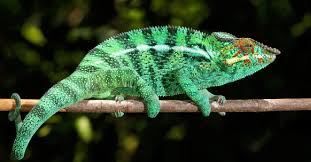
The term chameleónovité refers to the biological family Chamaeleonidae—aka, the chameleon family. Over 200 species strong, these quirky reptiles call Africa, Madagascar, parts of Europe, the Middle East, and Asia home. They’re scattered across forests, deserts, mountains, and in some cases, your cousin’s terrarium.
Traits That Make Them Stand Out
Talk about a wild lineup of features! Members of the chameleónovité family typically boast:
-
Zygodactylous feet (meaning toes grouped in weird but wonderfully functional two-and-three combinations)
-
Prehensile tails that act like an extra limb
-
Eyes that move independently, giving them a 360° view
-
Projectile tongues capable of grabbing prey in milliseconds
-
Color-shifting abilities that respond to mood, temperature, social interaction, and light
Just imagine waking up and deciding your outfit based on your emotional state. Chameleons do exactly that, minus the existential crisis.
Color Magic: How Do Chameleons Change Colors?
Let’s jump into the million-dollar question—is it paint, sorcery, nanotech, or something else entirely?
The Science Behind the Shimmer
While it might look like camouflage wizardry, the truth is even cooler. Beneath their skin, chameleons have special cells called iridophores, filled with microscopic crystals that reflect light.
By adjusting the spacing between these crystals, they change the wavelengths of light their skin reflects, resulting in those stunning blues, greens, yellows, and even fiery reds.
No dyes. No pigments squirting around. Just physics and biological brilliance.
Why Change Colors Anyway?
Contrary to popular belief, chameleónovité creatures usually shift hues for reasons other than hiding from predators.
Some reasons include:
-
Mood regulation
Feeling sassy? They’ll brighten up. Feeling stressed? Dark mode on. -
Social signaling
Chameleons flirt, fight, and sass each other using color. -
Temperature control
Dark colors absorb heat; lighter ones reflect it. -
Camouflage
Okay, fine, sometimes it is hiding… but usually not the way cartoons portray it.
The Extraterrestrial Anatomy of Chameleónovité
Anyone who’s seen a chameleon up close knows they look… different. They’re like the lovechild of a medieval dragon, an alien, and someone’s cranky grandpa.
Those Eyes, Though
Their eyes are perhaps the most iconic feature—tiny domes moving independently. One eye can scan for snacks while the other watches for threats. Talk about multitasking!
Tongue Like a Missile Launcher
Stretching up to twice the length of their body, a chameleon’s tongue:
-
Unfurls at insane speed
-
Strikes with surprising accuracy
-
Ends in a suction-cup-like structure
Imagine snagging a doughnut from across the kitchen—without leaving the couch. That’s chameleon life.
Their Feet and Tails: Nature’s Climbing Toolkit
Chameleons are built for life off the ground.
-
Zygodactylous feet act like clamps gripping branches
-
Prehensile tails work as tree-clinging anchors
It’s like having climbing gear built into your body.
Habitats of the Chameleónovité: Where Do These Creatures Roam?
From lush rainforests to bone-dry deserts, chameleons adapt to a surprising range of environments.
1. Madagascar: Chameleon Heaven
Home to almost half of all known species, Madagascar is basically the Hollywood of chameleons—everyone wants to live there.
2. African Forests and Savannahs
Species here display incredible color variety, often blending into foliage with soft greens and earthy tones.
3. European Outposts
Yep—you read that right. Species like the Chamaeleo chamaeleon make appearances in Spain, Portugal, and beyond.
4. Mountain Slopes
Some species thrive at high altitudes, dealing with colder temperatures and thinner air… all while maintaining their signature chill.
Chameleónovité in Culture, Myth, and Symbolism
These reptiles aren’t just biological marvels—they’re cultural icons across different societies.
Symbol of Change
Because of their shifting colors, chameleons often represent transformation, adaptability, and even emotional complexity.
Guardians in Folklore
Some African tribes believe chameleons deliver spiritual messages, blending the physical and spiritual realms.
Modern Mascots
From logos to video games, the imagery of a chameleon stands for flexibility, intelligence, and sometimes mischief.
Keeping a Chameleon as a Pet: A Colorful Responsibility
Thinking about adopting one of these rainbow reptiles? Brace yourself—it’s not as breezy as it seems.
What Potential Owners Should Know
Here’s the tea: chameleons are not low-maintenance pets.
They Require:
-
Controlled humidity
-
Daily misting or drip systems
-
Spacious vertical enclosures
-
UVB lighting
-
Temperature gradients
-
Specialized diets
And yes—they get moody.
Pros
-
They’re mesmerizing to observe
-
Quiet and solitary
-
Unique personalities
Cons
-
Fragile health
-
Sensitive to stress
-
Not ideal for handling
-
Complex habitat needs
If you’re not ready to become a reptile climate engineer, this may not be the pet for you.
Threats to Chameleónovité: Why These Creatures Need Protection
Sadly, many chameleon species face increasing danger.
Major Threat Factors:
-
Deforestation
Their habitats are shrinking faster than we can track. -
Illegal pet trade
Many species are captured and sold without regard for their survival. -
Climate change
Temperature shifts impact their ability to regulate body functions. -
Predators and human expansion
Roads, construction, and farmland destroy safe zones.
Conservation Efforts
Groups worldwide are now:
-
Establishing protected reserves
-
Educating local communities
-
Regulating trade
-
Supporting captive breeding
Because if we lose them… we lose one of nature’s most extraordinary evolutionary masterpieces.
The Weird, Wonderful, and Lesser-Known Facts About Chameleons
Some of these might blow your socks off.
-
They can see ultraviolet light.
Humans? Not so much. -
Their tongues accelerate faster than fighter jets.
-
Some species are barely the size of a fingernail.
-
They don’t hear well—almost deaf, actually.
-
Their color change isn’t instantaneous.
Quick, yes. Magical, not quite. -
Each eye has a telephoto lens.
Imagine zooming in on a cookie from across the room.
FAQs About Chameleónovité
1. Do chameleons change color to match any background?
Not exactly. They change color based on mood, communication, and temperature—camouflage is just one small part of the equation.
2. Are chameleons good pets for beginners?
Generally, no. They’re sensitive, require specialized care, and get stressed easily.
3. How long do members of the chameleónovité family live?
Depending on the species, anywhere from 2 to 10 years, though some can live longer with proper care.
4. Can all chameleons change colors dramatically?
Nope! Some species shift subtly between greens and browns.
5. Do chameleons bite?
They can, but they’d rather puff up, hiss, or give you the ultimate side-eye before resorting to biting.
Conclusion: Celebrating the Magic of Chameleónovité
Chameleons aren’t just reptiles—they’re living works of art, blending intricate biology with almost otherworldly abilities. The chameleónovité family showcases evolution at its most imaginative, demonstrating how species adapt in astonishing ways to survive, communicate, and thrive.
Their shimmering colors, alien-like anatomy, and secretive lifestyles remind us how much wonder still exists in the natural world. But with growing threats to their habitats and survival, appreciating them isn’t enough—we must also protect them.
So the next time you see a chameleon on screen or perched calmly on a branch, take a moment to admire the miracle in front of you. These creatures aren’t just survivors—they’re storytellers, changemakers, and vibrant symbols of nature’s boundless creativity.
